What Makes a Radiant Cut Diamond Different?
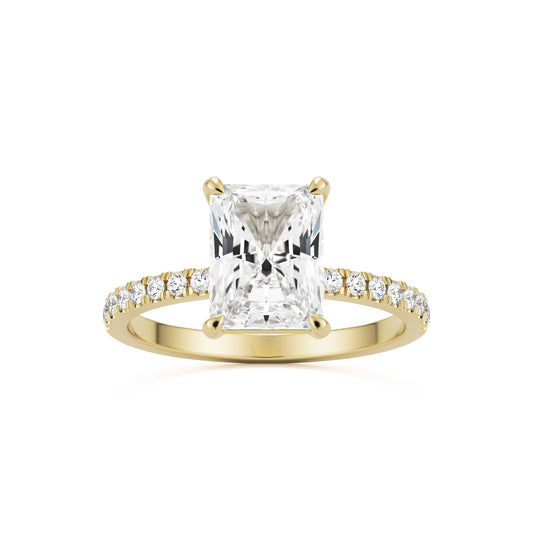
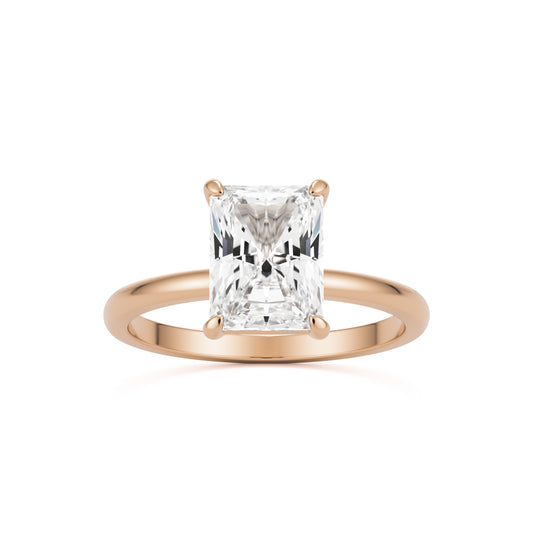
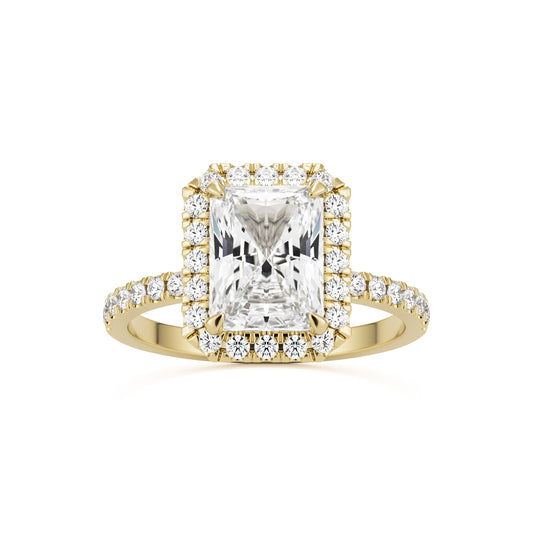
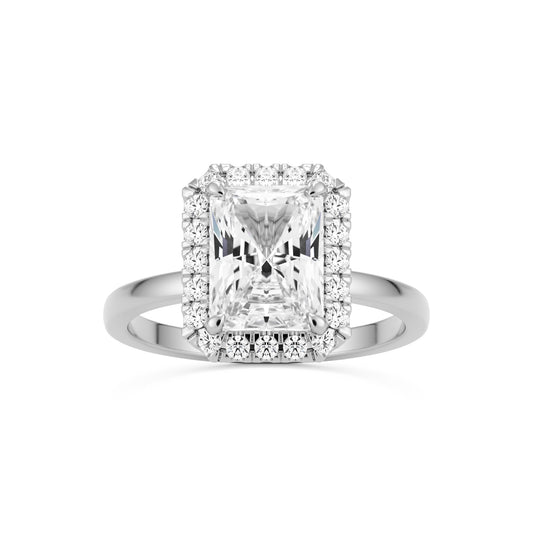
The radiant cut combines a rectangular or square outline with a brilliant-style facet pattern. Its cropped corners give the stone an eight-sided perimeter, while numerous facets within the diamond create smaller, more frequent flashes of light than a traditional step cut.
Radiant diamonds can range from nearly square to distinctly elongated. This makes the shape particularly versatile for shoppers who like angular diamonds but want more control over the proportions and overall silhouette.
Unlike an emerald cut, where the orderly step facets are a major part of the stone's visual identity, a radiant cut emphasizes brilliance and scintillation.
Radiant Cut Lab Diamond Ring Styles
The combination of straight edges, cropped corners and brilliant faceting allows radiant diamonds to work with a wide range of engagement ring designs.
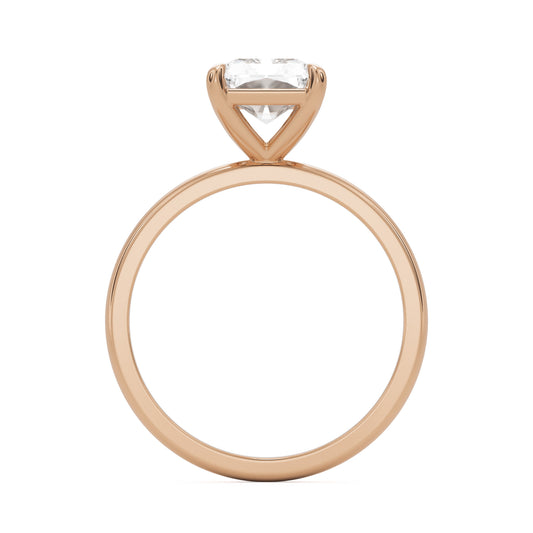
Solitaire settings keep the radiant center diamond as the primary visual focus and emphasize its geometric outline.
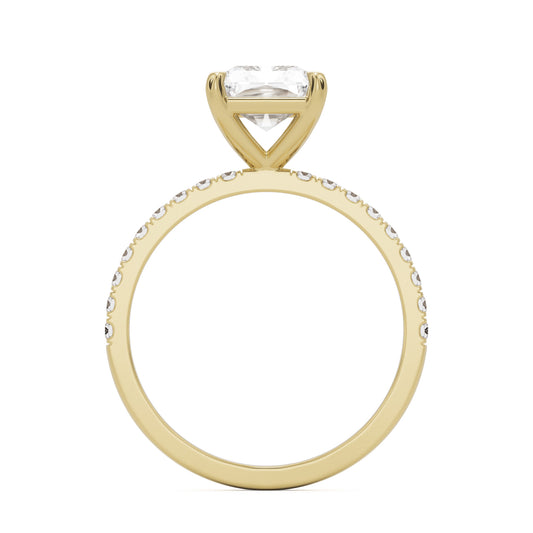
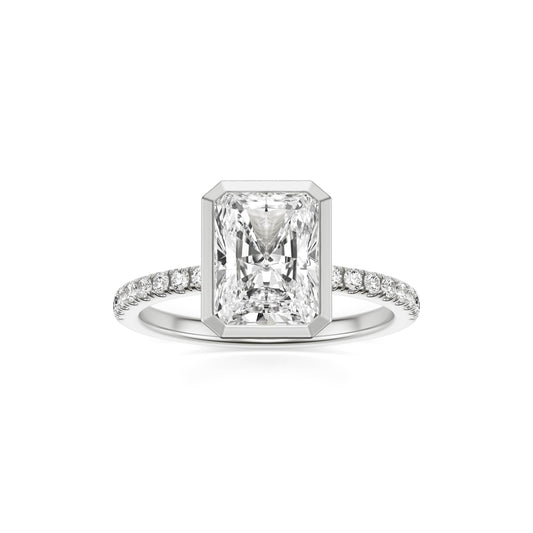
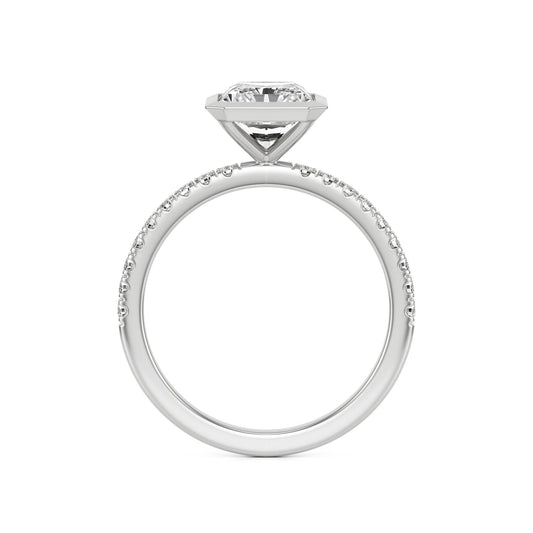
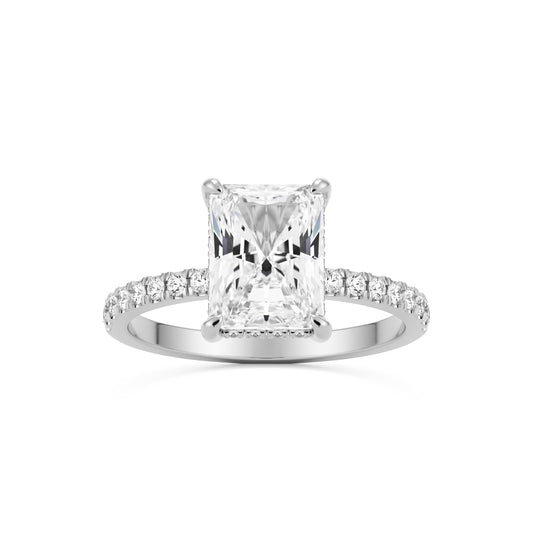
Pavé settings add smaller diamonds along the band, extending the sparkle of the center stone across the ring.
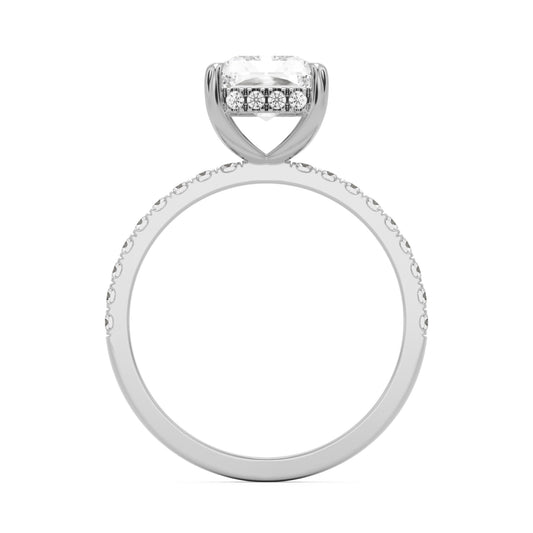
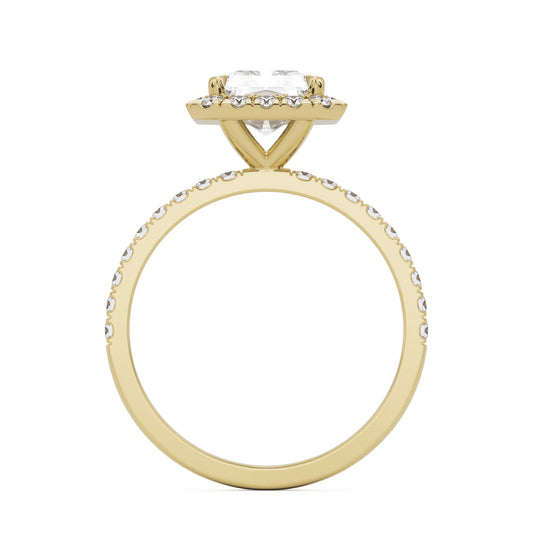
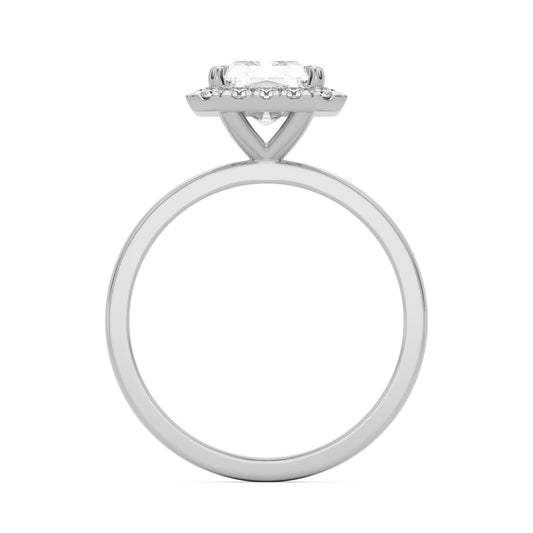
Hidden halo settings place accent diamonds beneath the center stone, adding detail to the profile while maintaining the radiant diamond's outline from above.
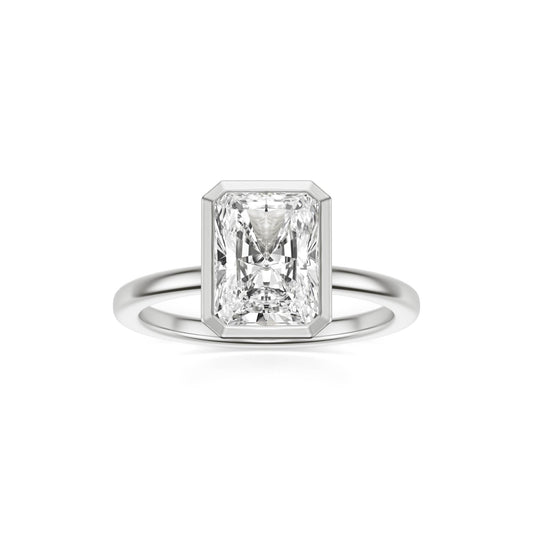
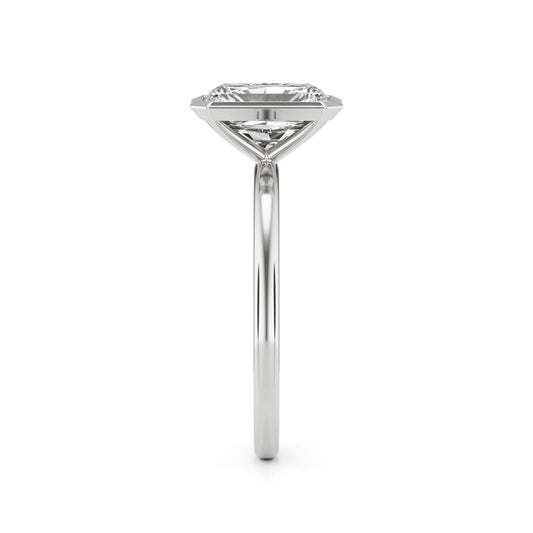
Bezel settings surround the perimeter of the radiant diamond with precious metal, complementing its straight edges and protecting its cropped corners.
Halo settings surround the radiant center stone with smaller diamonds for additional brilliance and visual presence.
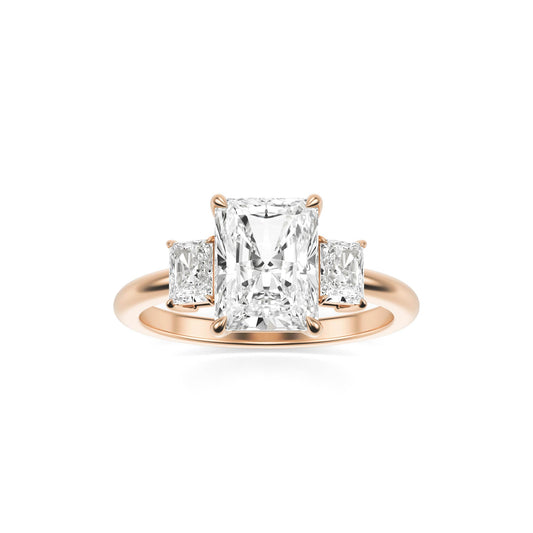
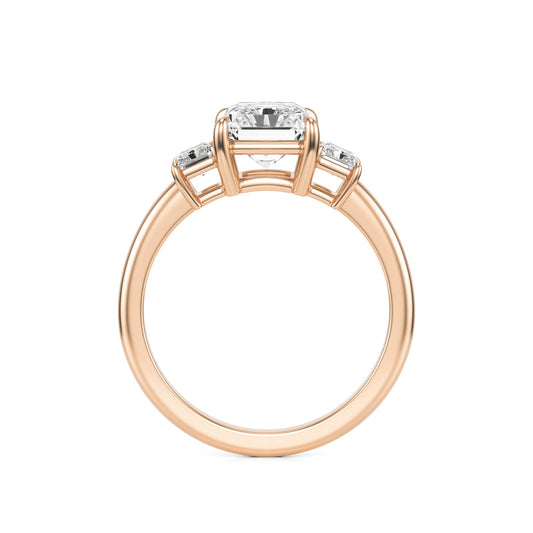
Three-stone settings pair the radiant center diamond with complementary side stones to create additional width and coverage across the finger.
Radiant Lab Diamonds by Carat Weight
Carat measures diamond weight rather than exact visible dimensions. With radiant cuts, two diamonds of identical carat weight can have noticeably different face-up appearances depending on their length, width, depth and proportions.
Shop Gema&Co lab grown diamond engagement rings by center-stone carat weight:
For radiant diamonds, actual millimeter dimensions and length-to-width ratio are particularly useful alongside carat weight because they determine whether the stone appears more square, rectangular or elongated.
Choosing Radiant Cut Diamond Proportions
One of the advantages of the radiant cut is the variety of proportions available.
A lower length-to-width ratio produces a squarer radiant, while a higher ratio creates a longer rectangular silhouette. Elongated radiants provide greater vertical coverage along the finger, while squarer radiants offer a more compact geometric appearance.
There is no single ideal length-to-width ratio for every radiant diamond. The best proportion depends on whether you prefer a square, moderately elongated or distinctly elongated center stone.
When comparing diamonds, consider the actual length and width in millimeters in addition to carat weight.
Radiant Cut vs. Emerald Cut Lab Diamonds
Radiant and emerald cut diamonds can have remarkably similar outlines. Both are commonly rectangular, feature straight sides and use cropped corners. Their facet patterns, however, create substantially different appearances.
An Emerald Cut Lab Diamond Engagement Ring uses long step facets that produce broad flashes of light and the characteristic hall-of-mirrors effect.
A radiant cut uses brilliant-style faceting that breaks reflected light into more numerous flashes, producing greater scintillation and a livelier appearance.
For shoppers who like an elongated rectangular shape, the choice between the two often comes down to light performance: radiant for brilliant-style sparkle; emerald for structured step-cut reflections.
For other angular brilliant-cut options, compare Cushion & Elongated Cushion Lab Diamond Engagement Rings for softer corners or Princess Cut Lab Diamond Engagement Rings for a crisp square outline.
Do Radiant Cut Diamonds Have a Bow Tie?
Radiant cut diamonds can display a bow-tie effect, particularly in elongated stones.
A bow tie appears as a darker area extending across the center of certain elongated diamond shapes. Its strength depends on the individual diamond's facet arrangement and proportions.
A subtle bow tie is not automatically a defect. The more important consideration is whether the dark area is strong enough to distract from the diamond's overall brilliance and appearance.
Because two radiant diamonds with similar grading reports can display light differently, visual appearance remains important when evaluating an individual stone.
Radiant Lab Diamond Quality and IGI Grading
Lab grown diamonds are real diamonds with the same fundamental chemical composition, crystal structure and physical properties as mined diamonds. Their primary difference is origin: lab grown diamonds are created in controlled laboratory environments rather than mined from the earth.
Diamond quality is evaluated using characteristics including cut, color, clarity and carat weight. For radiant diamonds, buyers should also consider symmetry, dimensions, length-to-width ratio, facet appearance and bow-tie visibility.
At Gema&Co, lab grown center diamonds 1.00 carat and larger are IGI graded. Diamonds 0.99 carat and below are not individually graded.
Radiant Lab Diamond vs. Radiant Moissanite
Radiant lab diamonds and radiant moissanite can share the same rectangular brilliant-cut silhouette, but they are different gemstones.
A lab grown diamond has the same fundamental chemical and physical properties as a mined diamond. Moissanite is silicon carbide and has different optical properties, including greater dispersion that can produce more noticeable flashes of spectral color.
The highly faceted radiant cut can make the difference in optical character between the two materials especially noticeable.
Explore Gema&Co's Radiant Cut Moissanite Engagement Rings to compare the two.
You can also browse the complete Lab Grown Diamond Engagement Rings collection to compare additional diamond shapes, carat weights and setting styles.
Frequently Asked Questions
What is a radiant cut lab grown diamond?
A radiant cut lab grown diamond is a lab-created diamond cut with a square or rectangular outline, cropped corners and brilliant-style faceting. The combination gives it an angular silhouette with substantial sparkle and scintillation.
Is a radiant cut the same as an emerald cut?
No. Although the two shapes can have similar rectangular outlines, their facet patterns are very different. Emerald cut diamonds use step facets that create broad reflections, while radiant diamonds use brilliant-style faceting that produces more numerous flashes of light.
Do radiant diamonds look larger than round diamonds?
An elongated radiant can provide substantial face-up coverage because its dimensions extend farther along the finger. However, apparent size varies according to the individual diamond's carat weight, length, width and depth.
What is the best length-to-width ratio for a radiant diamond?
There is no single best ratio. Lower ratios create squarer radiants, while higher ratios create increasingly elongated rectangular stones. The best choice depends on the silhouette you prefer.
Do radiant cut diamonds have a bow tie?
They can. Bow ties are more commonly noticeable in elongated radiant diamonds and can range from subtle to pronounced. A slight bow tie is not necessarily a problem, but a very dark one can detract from the stone's overall appearance.
What setting is best for a radiant lab diamond?
Radiant diamonds work with many settings. A solitaire emphasizes the center stone's shape, pavé extends sparkle along the band, and a bezel complements the radiant's angular perimeter while providing additional protection. Hidden halo, halo and three-stone settings provide additional options.
Are Gema&Co radiant lab diamonds IGI graded?
Gema&Co lab grown center diamonds 1.00 carat and larger are IGI graded. Diamonds 0.99 carat and below are not individually graded.
What carat sizes are available?
Browse Gema&Co's 1 carat, 2 carat, 3 carat, 4 carat, and 5 carat & up lab diamond engagement ring collections.
Can I customize a radiant lab diamond engagement ring?
Yes. Gema&Co radiant lab diamond engagement rings are available with different center-stone sizes, precious metals and setting styles, with additional customization options available for specific design requirements.