What Makes a Cushion Cut Diamond Different?
A cushion cut is characterized by rounded corners and curved or gently bowed sides. Unlike a princess cut's sharp square corners or a radiant cut's cropped corners and straighter edges, the cushion has a noticeably softer outline.
Cushion diamonds can vary significantly in shape. Traditional cushions are approximately square, while elongated cushions have a greater difference between their length and width, producing a rectangular silhouette.
Their internal appearance can vary as well. Different cushion facet arrangements can produce everything from larger, clearly defined flashes of light to a finer pattern of smaller reflections.
Traditional vs. Elongated Cushion Lab Diamonds
The primary visual difference between traditional and elongated cushion diamonds is proportion.
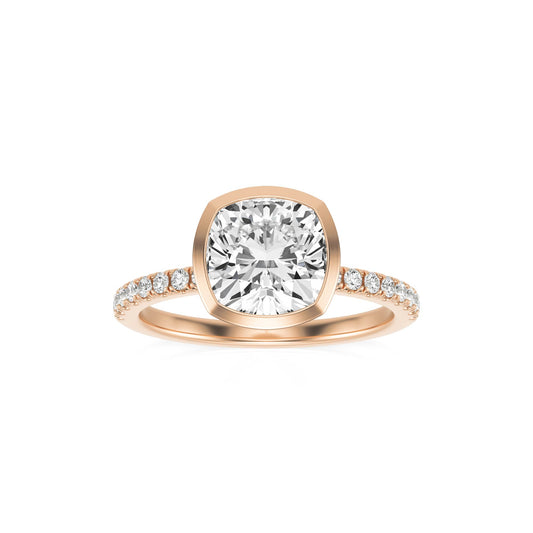
A traditional cushion has dimensions that are relatively close to square. Its rounded corners and fuller proportions create the classic pillow-shaped appearance associated with the cut.
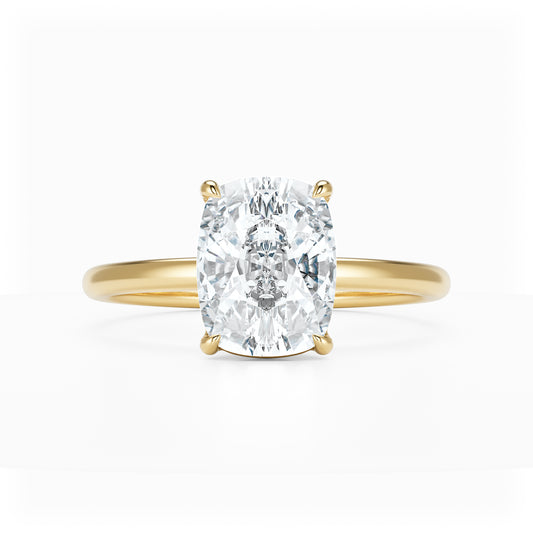
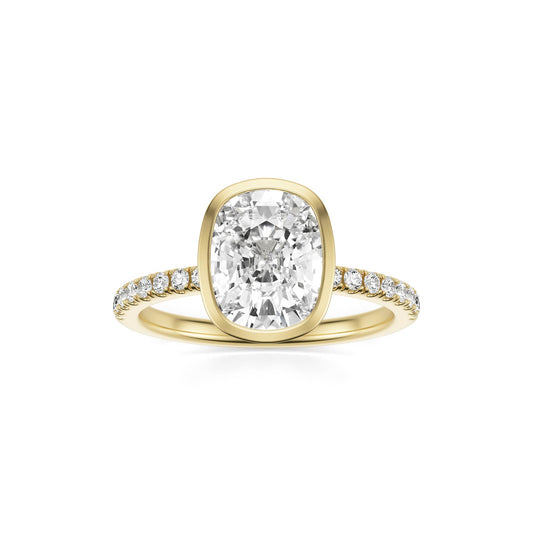
An elongated cushion diamond has a higher length-to-width ratio, creating a longer rectangular silhouette while retaining the cushion's characteristic curved corners. This additional length can provide greater vertical coverage along the finger and creates a distinctly different appearance from a square cushion.
Neither version is inherently better. The choice depends on whether you prefer the balanced proportions of a traditional cushion or the extended silhouette of an elongated cushion.
Cushion Lab Diamond Ring Styles
Both traditional and elongated cushion diamonds work across a wide range of engagement ring settings.
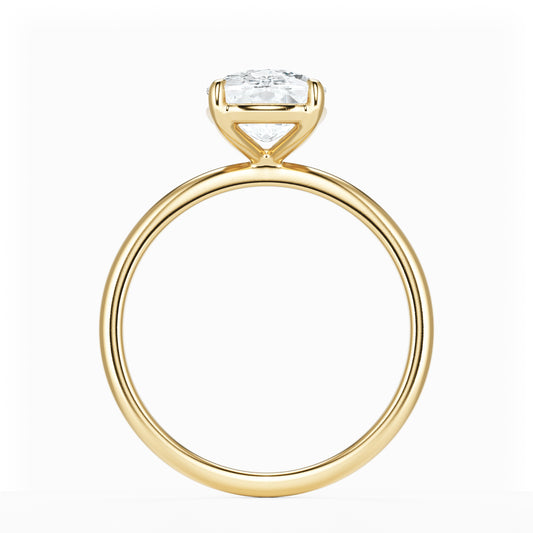
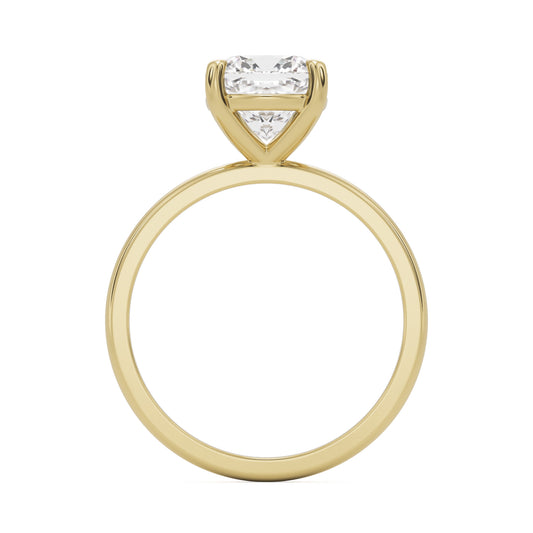
Solitaire settings keep attention on the cushion center diamond and make its proportions and rounded outline especially prominent.
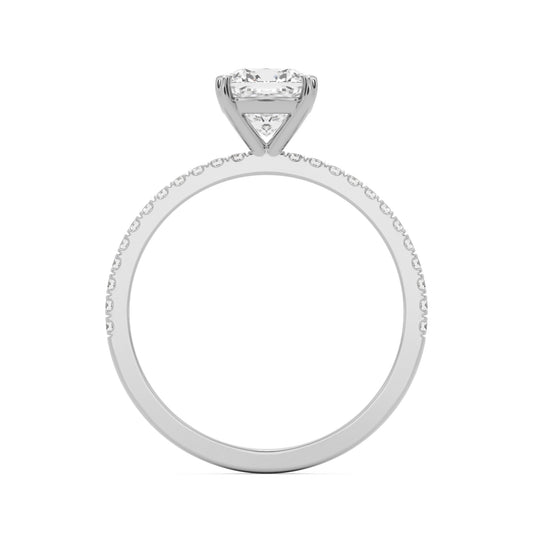
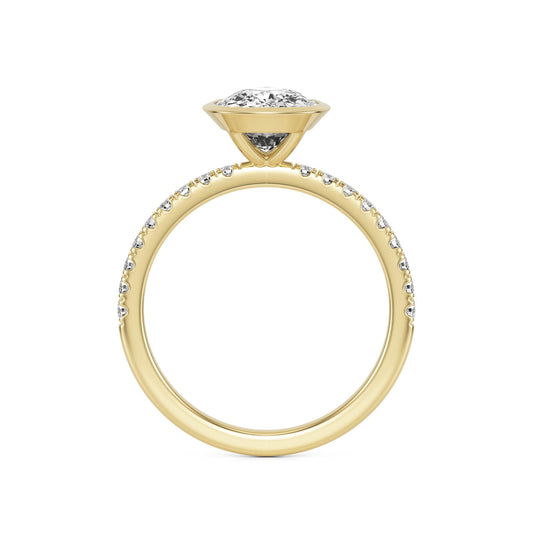
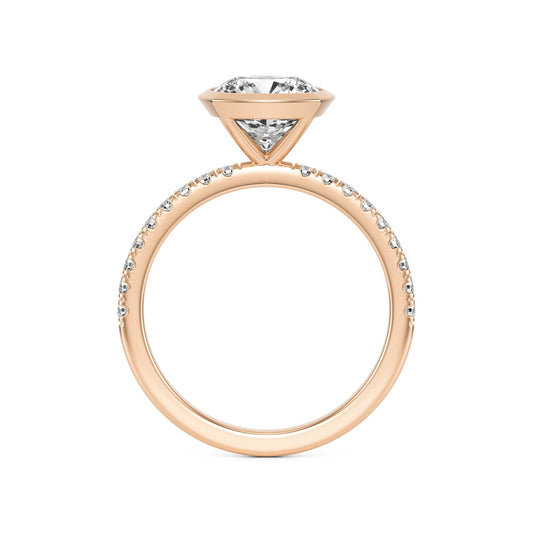
Pavé settings add smaller diamonds along the band for additional brilliance.
Hidden halo settings position accent diamonds beneath the center stone, adding sparkle from the profile while preserving the cushion outline from above.
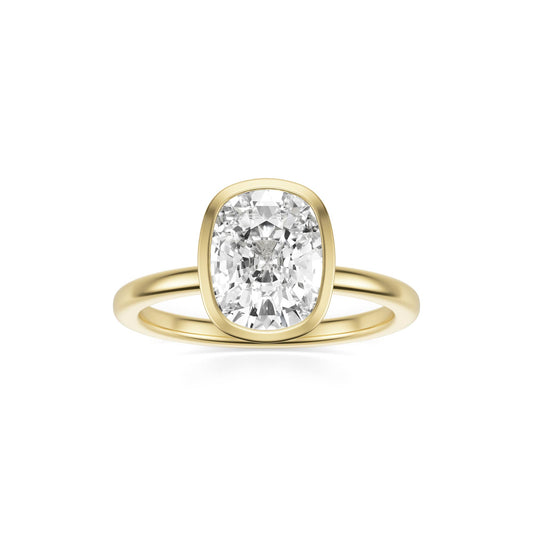
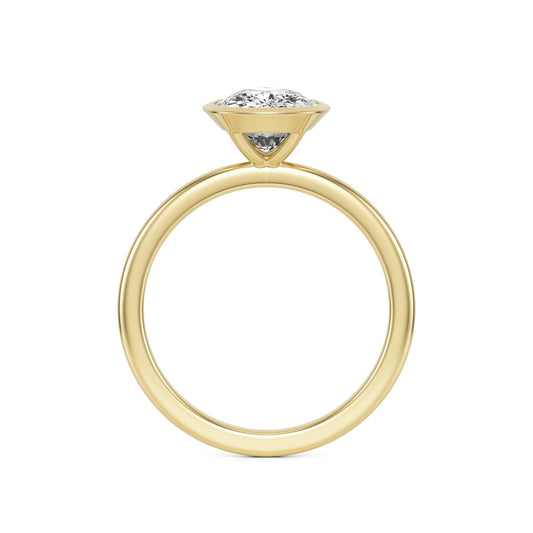
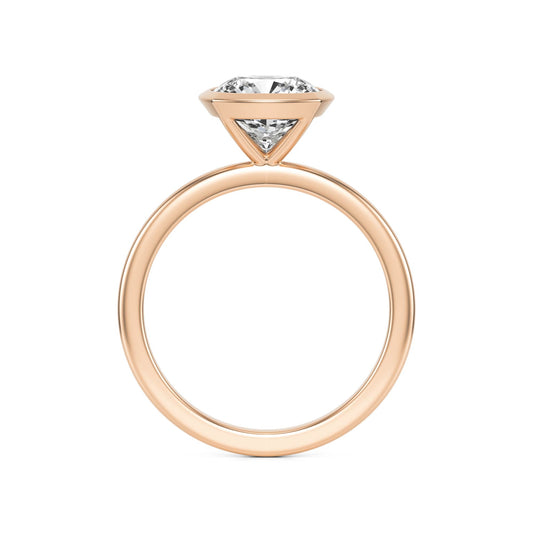
Bezel settings surround the center diamond with precious metal, following its rounded perimeter while providing additional protection.
Halo settings surround the cushion center with smaller diamonds, increasing overall brilliance and visual presence.
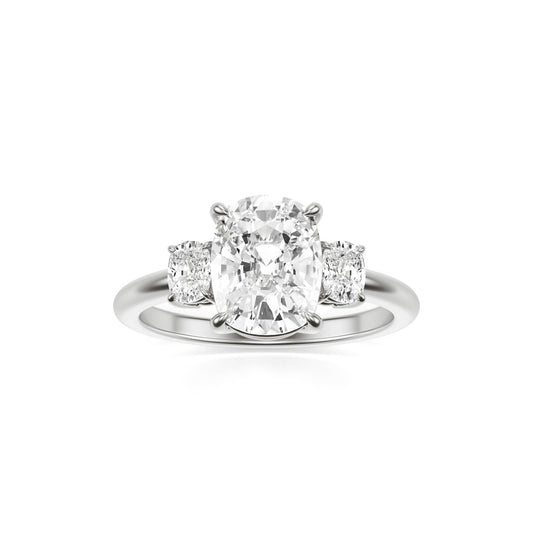
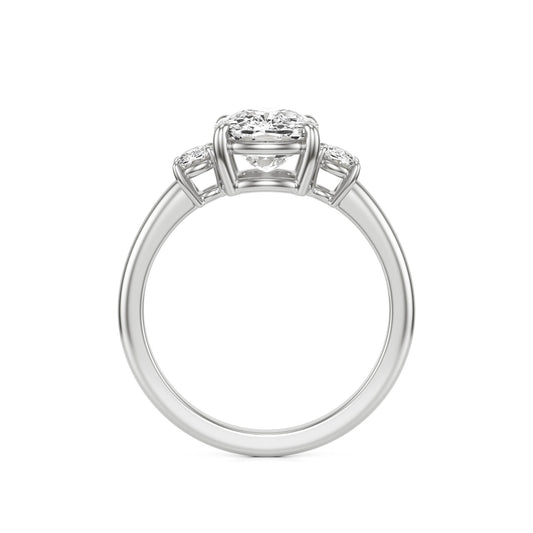
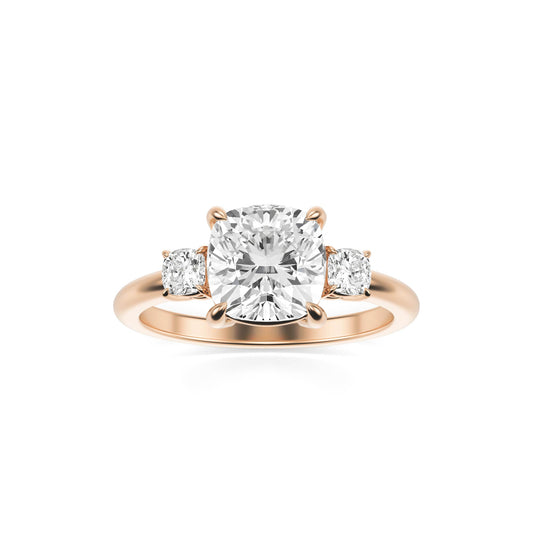
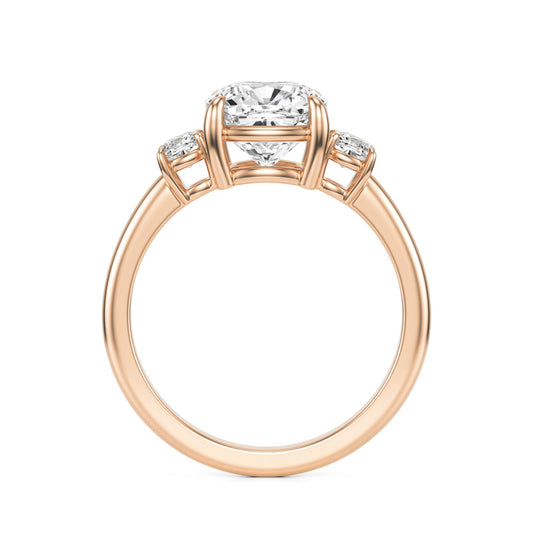
Three-stone settings combine a cushion center diamond with complementary side stones for additional width across the finger.
Cushion Lab Diamonds by Carat Weight
Carat measures diamond weight rather than exact visible size. Two cushion diamonds with the same carat weight can have different face-up dimensions depending on their length, width, depth and proportions.
This distinction becomes particularly important when comparing traditional and elongated cushions because the same carat weight can be distributed across noticeably different outlines.
Shop Gema&Co lab grown diamond engagement rings by center-stone carat weight:
When comparing cushion diamonds, actual millimeter dimensions and length-to-width ratio can provide useful context alongside carat weight.
Choosing a Cushion Diamond Length-to-Width Ratio
Length-to-width ratio describes how square or elongated a cushion diamond appears.
A ratio closer to 1.00 produces a squarer cushion. As the ratio increases, the diamond becomes progressively more elongated.
There is no universal ideal ratio. Buyers looking for a classic cushion appearance may prefer proportions closer to square, while those who want greater vertical finger coverage may prefer an elongated cushion.
Because cushions can vary considerably in both outline and faceting, two diamonds with similar ratios can still look different. The overall shape should therefore be evaluated visually rather than by ratio alone.
Cushion Brilliant, Modified Brilliant and “Crushed Ice” Appearance
Cushion diamonds can be cut with different facet arrangements, which is one reason their internal appearance varies so much.
Some cushions display larger, more distinct reflections with clearly visible facet patterns. Others create numerous smaller reflections that can produce the appearance commonly described as “crushed ice.”
“Crushed ice” is an informal visual description rather than a diamond quality grade. It refers to the fragmented pattern of small reflections visible within some cushion and other modified brilliant cuts.
Neither appearance is automatically superior. Some buyers prefer larger, more defined flashes, while others prefer the finer scintillation of a crushed-ice appearance.
Elongated Cushion vs. Radiant Cut Lab Diamonds
Elongated cushion and radiant diamonds can occupy similar rectangular proportions, making them natural alternatives for shoppers who want an elongated brilliant-cut center stone.
A Radiant Cut Lab Diamond Engagement Ring typically has straighter sides and cropped corners, creating a more angular geometric outline.
An elongated cushion has softer, rounded corners and generally more curved sides. The result is a rectangular diamond with a gentler silhouette.
Both shapes can display brilliant-style faceting and significant sparkle. The primary visual distinction is often the outline: radiant for sharper geometry; elongated cushion for softer curves.
If you prefer a distinctly square center stone with sharper geometry, explore Princess Cut Lab Diamond Engagement Rings.
Elongated Cushion vs. Oval Lab Diamonds
Elongated cushions and oval diamonds both extend vertically along the finger, but their outlines are distinctly different.
An Oval Lab Diamond Engagement Ring has a continuous curved outline without corners. An elongated cushion retains four identifiable sides and rounded corners, giving it more geometric structure.
Both can provide substantial finger coverage, making the choice largely a matter of whether you prefer the continuous curves of an oval or the softly rectangular appearance of an elongated cushion.
Cushion Lab Diamond Quality and IGI Grading
Lab grown diamonds are real diamonds with the same fundamental chemical composition, crystal structure and physical properties as mined diamonds. Their primary difference is origin: lab grown diamonds are created in controlled laboratory environments rather than mined from the earth.
Diamond quality is evaluated using characteristics including cut, color, clarity and carat weight. For cushion diamonds, proportions, dimensions, symmetry and facet appearance should also be considered because cushions can vary substantially from stone to stone.
At Gema&Co, lab grown center diamonds 1.00 carat and larger are IGI graded. Diamonds 0.99 carat and below are not individually graded.
Cushion Lab Diamond vs. Cushion Moissanite
Cushion lab diamonds and cushion moissanite can share similar square, rectangular or elongated silhouettes, but they are different gemstones.
A lab grown diamond has the same fundamental chemical and physical properties as a mined diamond. Moissanite is silicon carbide and has different optical properties, including greater dispersion that can produce more noticeable flashes of spectral color.
Explore Gema&Co's Cushion Cut Moissanite Engagement Rings to compare the two.
You can also browse the complete Lab Grown Diamond Engagement Rings collection to compare additional shapes, carat weights and setting styles.
Frequently Asked Questions
What is a cushion cut lab grown diamond?
A cushion cut lab grown diamond is a lab-created diamond with rounded corners and a square or rectangular outline. Cushion diamonds generally use brilliant-style faceting, although their exact facet patterns and visual appearance can vary considerably.
What is an elongated cushion diamond?
An elongated cushion is a cushion cut with a rectangular rather than approximately square proportion. It retains the rounded corners and softer outline of a cushion while providing additional length along the finger.
Are elongated cushion diamonds popular for engagement rings?
Elongated cushions offer a combination of brilliant-style sparkle, soft corners and extended finger coverage. They are particularly suited to buyers who want a rectangular center stone without the more angular outline of a radiant or emerald cut.
What is the best length-to-width ratio for an elongated cushion?
There is no single best ratio. Ratios closer to 1.00 appear more square, while progressively higher ratios create a more elongated cushion. The best proportion depends on the silhouette and finger coverage you prefer.
What does “crushed ice” mean in a cushion diamond?
Crushed ice is an informal term describing a facet appearance made up of many small, fragmented reflections rather than larger, clearly defined flashes. It is an appearance rather than an official diamond grade.
What is the difference between an elongated cushion and a radiant diamond?
Both can have elongated rectangular proportions and brilliant-style faceting. Radiant diamonds generally have straighter sides and cropped corners, while elongated cushions have softer, rounded corners and a more curved outline.
Do cushion diamonds look large for their carat weight?
Face-up size varies considerably among cushion diamonds because their depth and proportions can differ. Elongated cushions can provide substantial vertical finger coverage, but actual millimeter dimensions should be considered alongside carat weight when comparing stones.
What setting is best for a cushion lab diamond?
Cushion diamonds work with many settings. A solitaire emphasizes the center stone's outline, pavé adds brilliance along the band, and hidden halo, halo and three-stone designs provide additional accent options.
Are Gema&Co cushion lab diamonds IGI graded?
Gema&Co lab grown center diamonds 1.00 carat and larger are IGI graded. Diamonds 0.99 carat and below are not individually graded.
What carat sizes are available?
Browse Gema&Co's 1 carat, 2 carat, 3 carat, 4 carat, and 5 carat & up lab diamond engagement ring collections.
Can I customize a cushion or elongated cushion lab diamond engagement ring?
Yes. Gema&Co cushion lab diamond engagement rings are available with different center-stone sizes, proportions, precious metals and setting styles, with additional customization options available for specific design requirements.