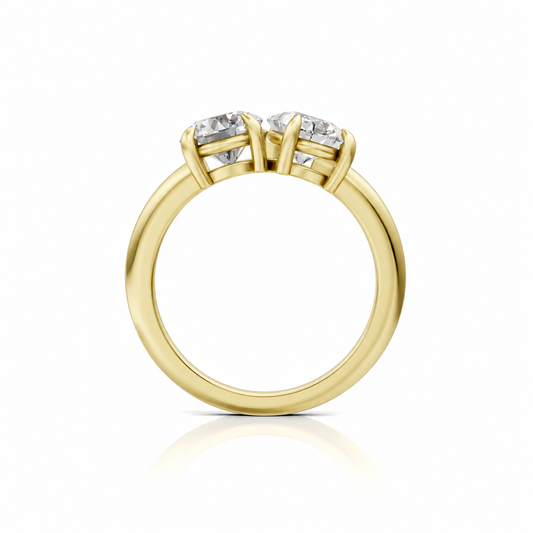
What Makes a Pear Shaped Diamond Different?
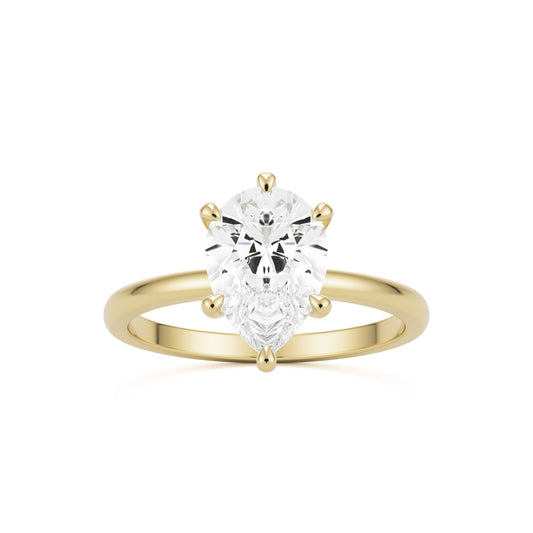
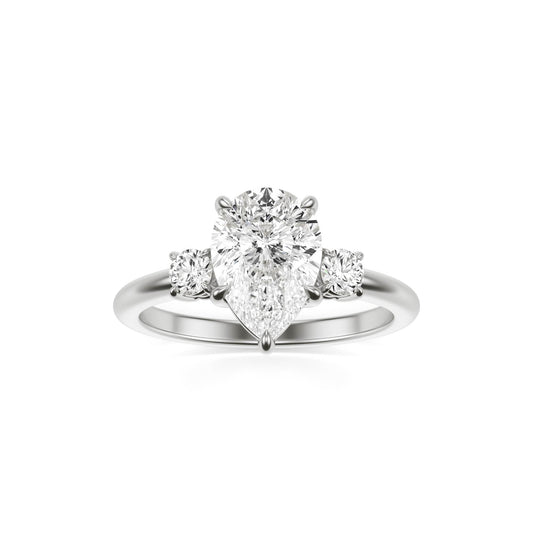
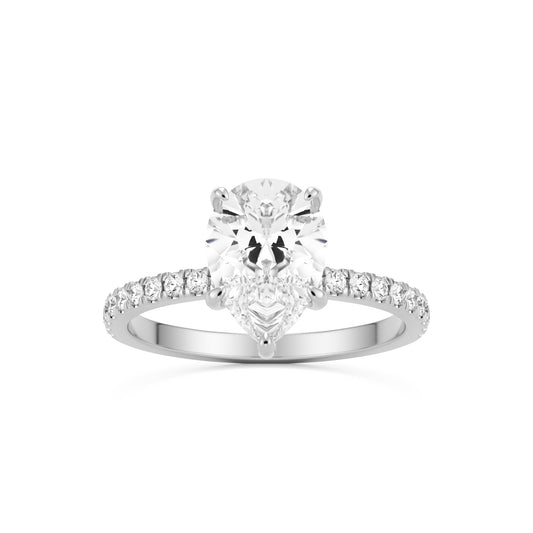
Sometimes called a teardrop diamond, the pear shape combines a rounded end with a single tapered point. Unlike symmetrical shapes such as round or emerald cuts, the pear has a directional silhouette that becomes an important part of the ring's overall design.
Pear diamonds use brilliant-style faceting to create sparkle while their elongated proportions extend along the finger. The combination can provide significant face-up presence without the completely symmetrical outline of an oval diamond.
When evaluating a pear diamond, overall symmetry is especially important. The curved sides should transition smoothly toward the point, and the two halves of the stone should appear visually balanced.
Pear Lab Diamond Ring Styles
The distinctive outline of a pear diamond works with both minimal and highly detailed engagement ring settings.
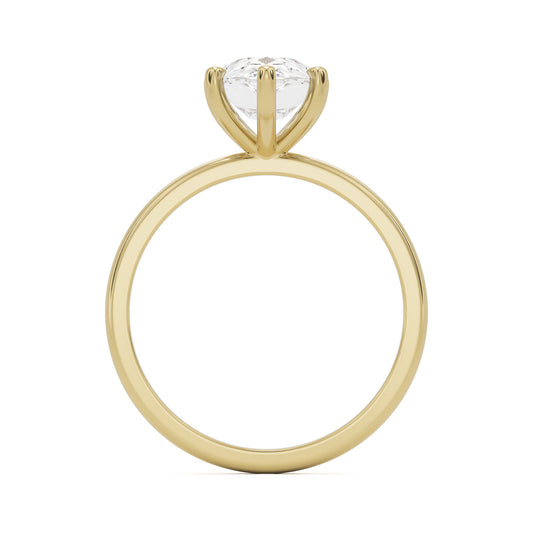
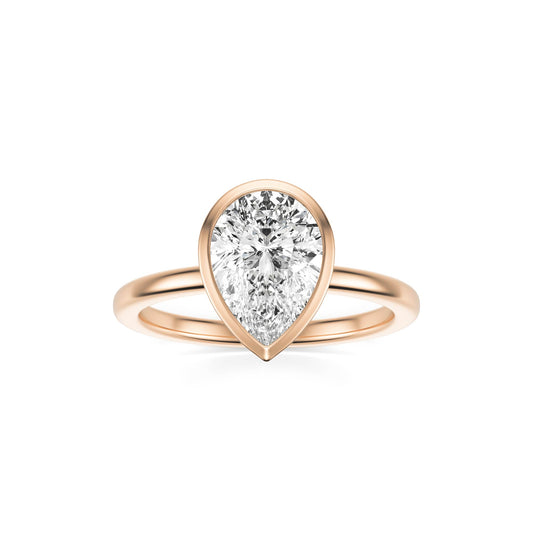
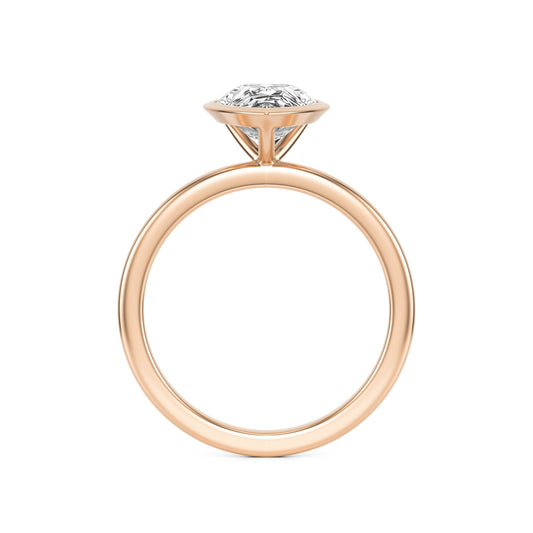
Solitaire settings emphasize the pear diamond's teardrop silhouette and allow the center stone to remain the primary focus.
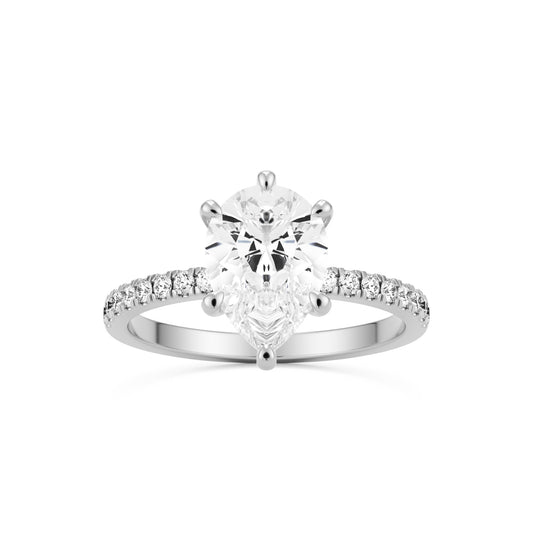
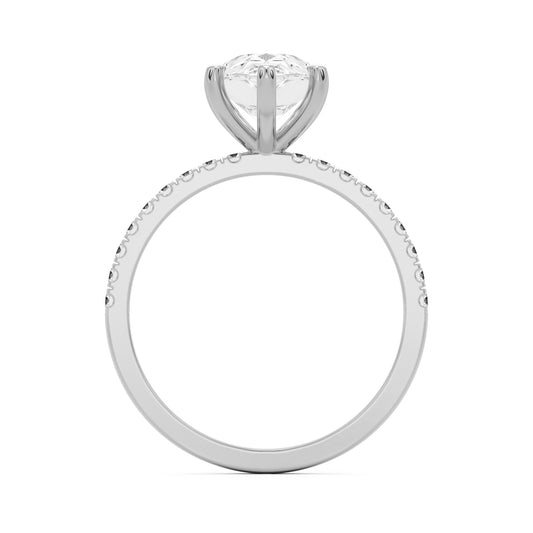
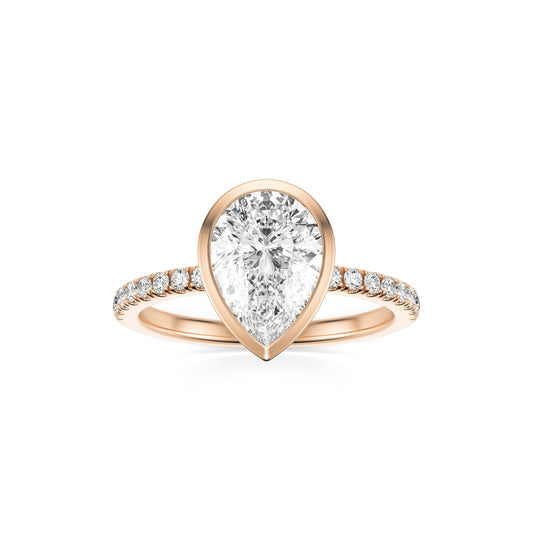
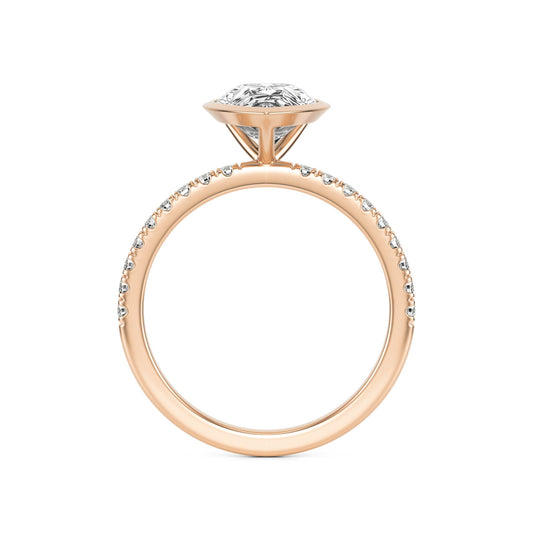
Pavé settings add smaller diamonds along the band for additional brilliance while preserving the center stone's distinctive outline.
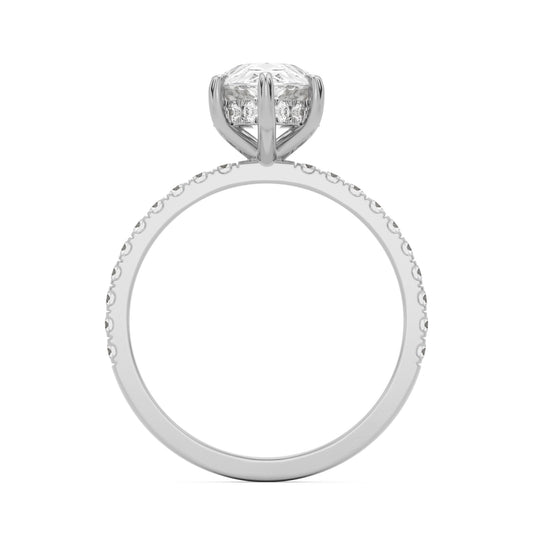
Hidden halo settings position accent diamonds beneath the pear center stone, adding detail from the side without surrounding its face-up outline.
Bezel settings surround the perimeter of the center stone with precious metal and can provide additional protection around the pear diamond's pointed tip.
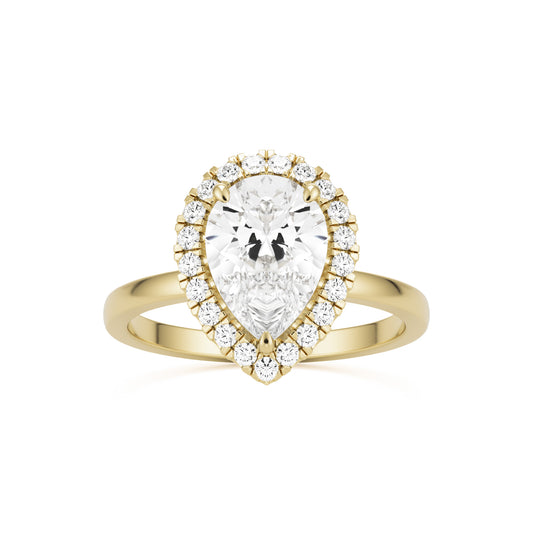
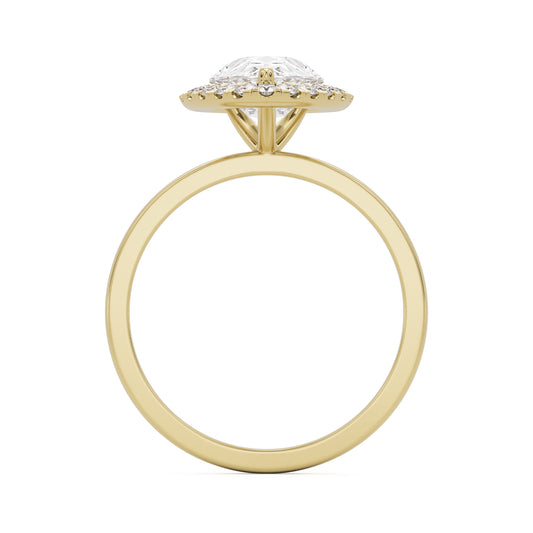
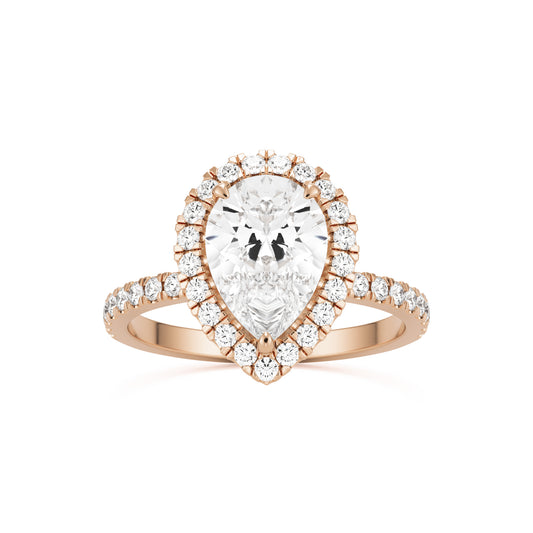
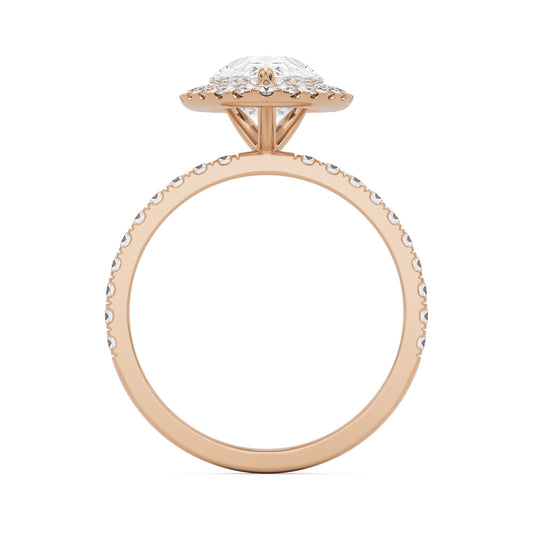
Halo settings follow the teardrop outline with smaller accent diamonds, increasing both brilliance and overall visual presence.
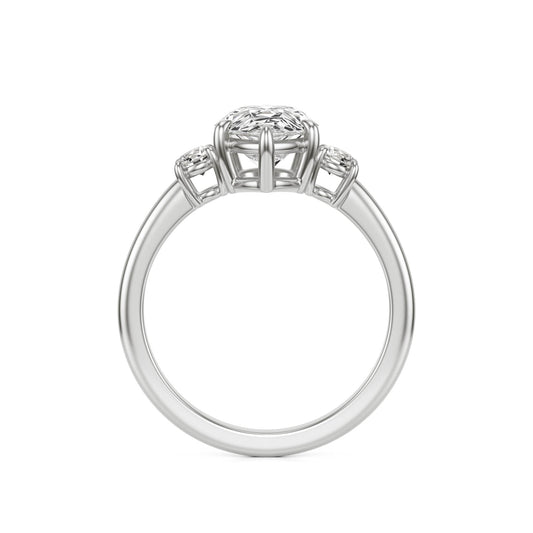
Three-stone settings combine a pear center diamond with complementary side stones for additional width and a more substantial composition.
Pear Lab Diamonds by Carat Weight
Carat measures diamond weight rather than exact visible size. Because pear diamonds are elongated, two stones of identical carat weight can have noticeably different face-up dimensions depending on their proportions and depth.
Shop Gema&Co lab grown diamond engagement rings by center-stone carat weight:
Actual length and width measurements are particularly useful when comparing pear diamonds because they help show how much of the stone's weight translates into visible finger coverage.
Choosing Pear Diamond Proportions
The length-to-width ratio of a pear diamond determines whether it appears fuller or more elongated.
A lower ratio produces a wider, rounder teardrop, while a higher ratio creates a narrower and more elongated silhouette. There is no single ideal ratio for every pear diamond—the preferred proportions depend largely on the shape and finger coverage you want.
Symmetry should also be considered alongside ratio. A well-shaped pear should have smooth curves without an uneven or noticeably lopsided appearance.
Which Direction Should a Pear Diamond Point?
Pear diamonds can be worn with the point facing either toward or away from the fingertip.
Wearing the point toward the fingertip is a common orientation and emphasizes the stone's elongated silhouette. Reversing the diamond creates a different visual effect while using the same fundamental shape.
There is no structural requirement that a pear diamond face one particular direction. Orientation is primarily a matter of design and personal preference.
Protecting the Point of a Pear Diamond
The pointed end is one of the defining features of a pear diamond, but it also deserves particular consideration when choosing a setting.
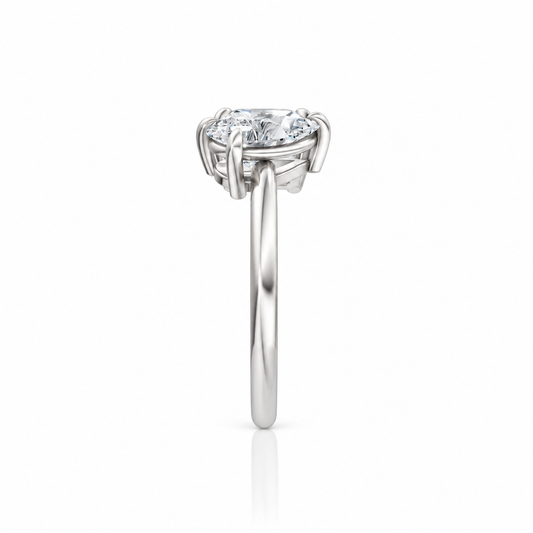
A properly designed setting should protect the tip from direct impacts. Depending on the design, this may be accomplished with a protective prong or by surrounding the diamond with a bezel.
The goal is to protect the vulnerable point without obscuring the distinctive teardrop outline.
Do Pear Shaped Diamonds Have a Bow Tie?
Pear shaped diamonds can display a bow-tie effect because of their elongated brilliant-style faceting.
A bow tie appears as a darker region across the center of the diamond. Its visibility varies considerably between individual stones depending on proportions and facet arrangement.
A subtle bow tie is common and is not automatically a defect. A very dark or distracting bow tie, however, can interfere with the diamond's overall brilliance and should be considered when evaluating an individual stone.
Pear vs. Oval Lab Diamond Engagement Rings
Pear and oval diamonds both provide elongated finger coverage and brilliant-style sparkle, but their silhouettes are distinctly different.
An Oval Lab Diamond Engagement Ring has two rounded ends and a symmetrical outline. A pear diamond combines one rounded end with a tapered point, creating a directional teardrop shape.
Both can visually elongate the finger. The choice largely depends on whether you prefer the balanced symmetry of an oval or the more distinctive asymmetry of a pear.
For another elongated shape with pointed geometry, compare Marquise Lab Diamond Engagement Rings, which uses two pointed ends rather than the pear cut's single tapered point.
Pear Lab Diamond Quality and IGI Grading
Lab grown diamonds are real diamonds with the same fundamental chemical composition, crystal structure and physical properties as mined diamonds. Their primary difference is origin: lab grown diamonds are created in controlled laboratory environments rather than mined from the earth.
Diamond quality is evaluated using characteristics including cut, color, clarity and carat weight. For pear diamonds, symmetry, dimensions, length-to-width ratio and bow-tie visibility are also important considerations.
At Gema&Co, lab grown center diamonds 1.00 carat and larger are IGI graded. Diamonds 0.99 carat and below are not individually graded.
Pear Lab Diamond vs. Pear Moissanite
Pear lab diamonds and pear moissanite can share the same teardrop silhouette, but they are different gemstones.
A lab grown diamond has the same fundamental chemical and physical properties as a mined diamond. Moissanite is silicon carbide and has different optical properties, including greater dispersion that can produce more noticeable flashes of spectral color.
Explore Gema&Co's Pear Moissanite Engagement Rings to compare the two.
You can also browse the complete Lab Grown Diamond Engagement Rings collection to compare additional shapes, carat weights and setting styles.
Frequently Asked Questions
What is a pear shaped lab grown diamond?
A pear shaped lab grown diamond is a lab-created diamond cut into an elongated teardrop shape with one rounded end and one tapered point. Pear diamonds generally use brilliant-style faceting to produce sparkle and scintillation.
Are pear and teardrop diamonds the same?
Yes. “Pear shaped” and “teardrop” generally refer to the same diamond shape.
Do pear shaped diamonds look larger?
Pear diamonds can provide substantial face-up coverage because their elongated dimensions extend along the finger. Perceived size still depends on the individual diamond's carat weight, length, width, depth and proportions.
What is the best length-to-width ratio for a pear diamond?
There is no single best ratio. Lower ratios create fuller pear shapes, while higher ratios create narrower and more elongated stones. The best proportion depends on the silhouette you prefer.
Which way should a pear engagement ring face?
A pear diamond can be worn with its point facing toward or away from the fingertip. Pointing toward the fingertip is common, but either orientation can be used depending on the desired design.
Do pear diamonds have a bow tie?
They can. The bow-tie effect can range from subtle to pronounced depending on the diamond's proportions and facet arrangement. A slight bow tie is not necessarily a problem, but a strong dark area can affect the diamond's appearance.
What setting is best for a pear lab diamond?
Pear diamonds work with many settings. A solitaire emphasizes the center stone's teardrop shape, while pavé, hidden halo, halo and three-stone designs add different levels of accent detail. Protection around the pointed tip is an important consideration regardless of setting style.
Are Gema&Co pear lab diamonds IGI graded?
Gema&Co lab grown center diamonds 1.00 carat and larger are IGI graded. Diamonds 0.99 carat and below are not individually graded.
What carat sizes are available?
Browse Gema&Co's 1 carat, 2 carat, 3 carat, 4 carat, and 5 carat & up lab diamond engagement ring collections.
Can I customize a pear lab diamond engagement ring?
Yes. Gema&Co pear lab diamond engagement rings are available with different center-stone sizes, precious metals and setting styles, with additional customization options available for specific design requirements.